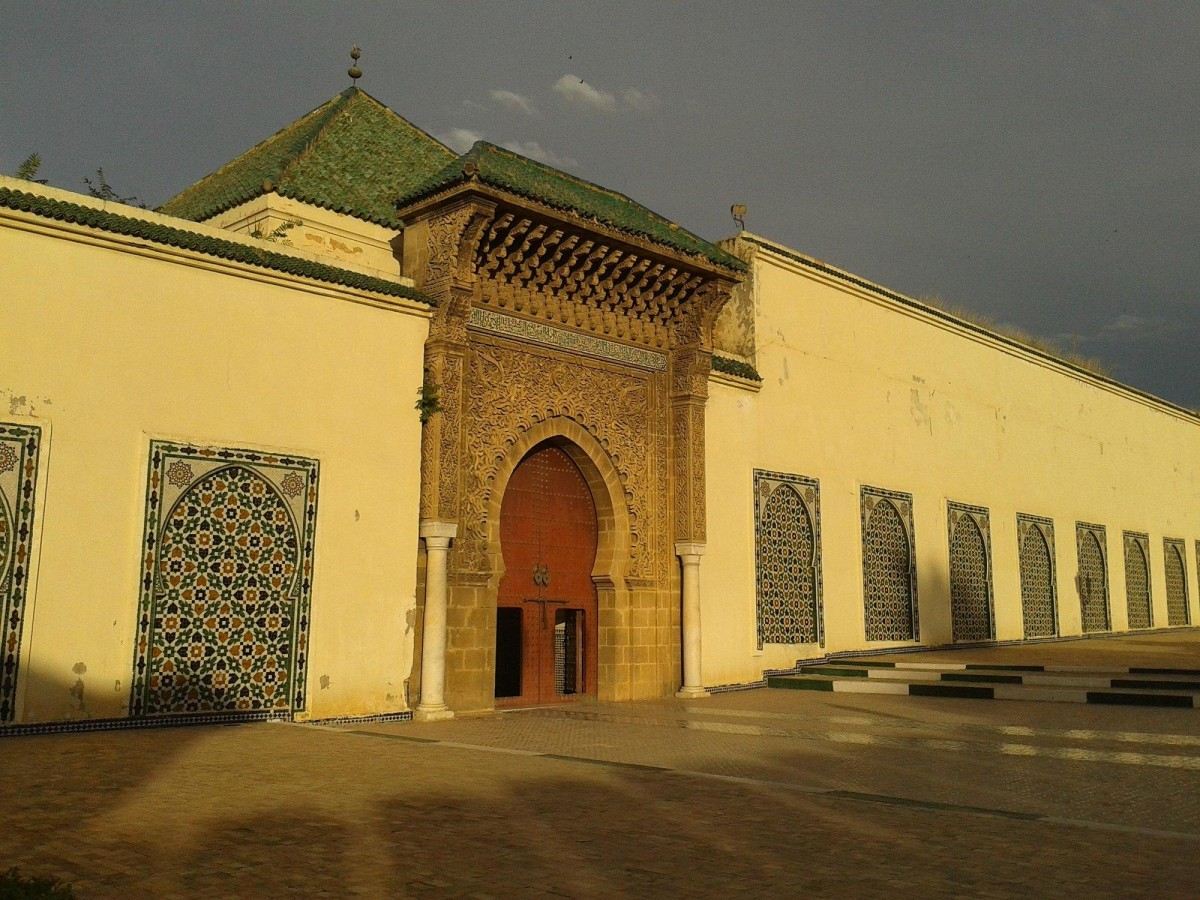
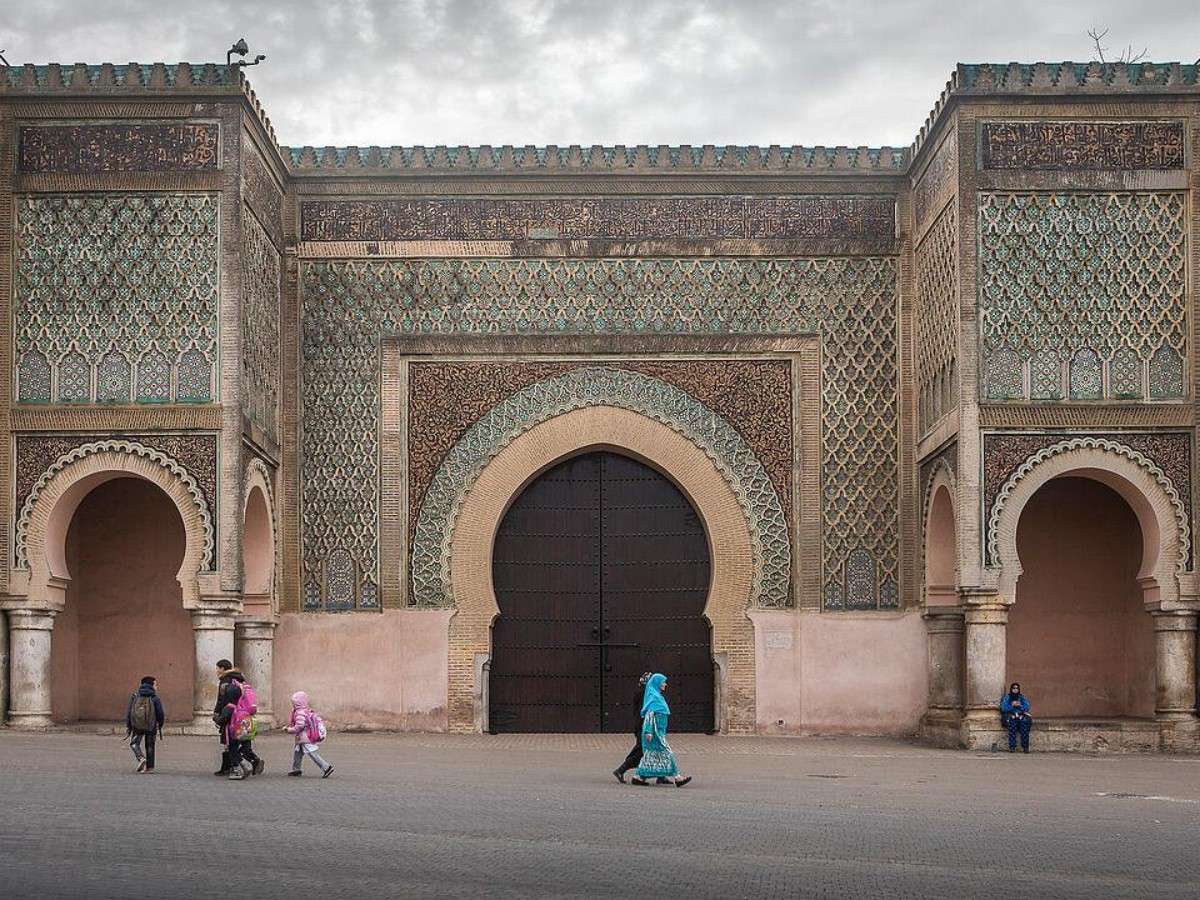
Among the four major imperial cities in Morocco, Meknes, the "black imperial city", always exists in a low-key and mysterious manner. When you walk through the winding alleys of the old city and stand in the center of El Hedim Square, the huge khaki gate standing in front of you is Bab el-Mansour Gate - this architectural miracle known as the "Arc de Triomphe of North Africa" is famous for its magnificent horseshoe arches, complex mosaics and Arabic mottos, but it has become Morocco's only "incomplete" national treasure because of a gap that can never be filled. What secrets are hidden in this gap? Is it an accident or a deliberate blank? Today, let us walk into Meknes and uncover the legend of the "unfinished" Mansour Gate.
Advertisement
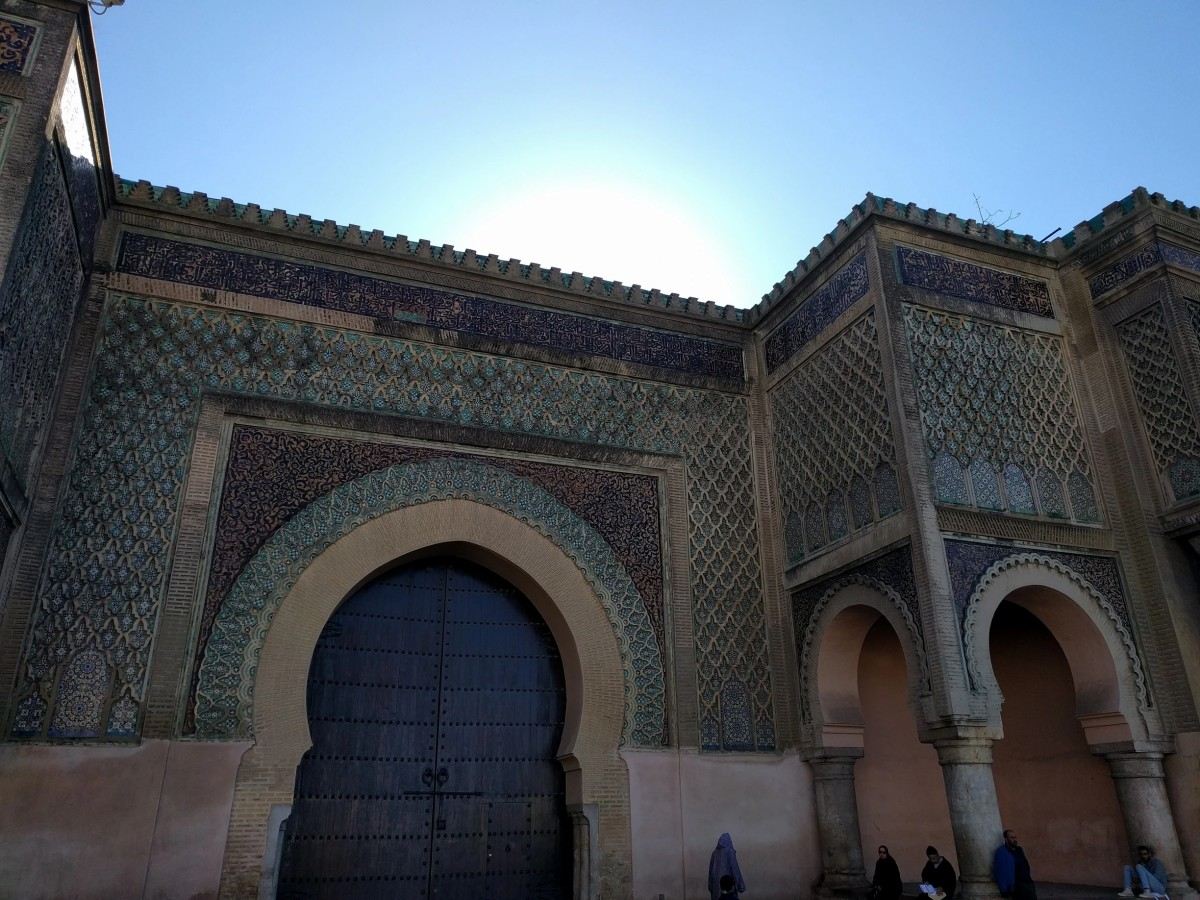
The story of Mansour Gate began in the 17th century Alaouite dynasty. In 1672, Moulay Ismail made Meknes the capital. The sultan, known for his iron-blooded rule, not only formed a 150,000-man black slave army, but also aspired to build an imperial capital that could compete with Europe. Mansour Gate, as the main entrance to the palace complex, was the core project of his "monumental legacy". The architect Mansour was a former Christian who converted to Islam. He perfectly combined the Spanish-Moorish style with Islamic geometric patterns, using Roman columns, mosaics and Arabic inscriptions to create the most magnificent city gate in North Africa.
Advertisement
However, Ismail's ambition far exceeded the progress of the project. When the sultan died in 1727, Mansour Gate was still unfinished. His son Moulay Abdullah inherited his will and barely completed the main structure in 1732, but the decorative elements and some inscriptions on the top remained in a "semi-finished" state forever. This period of history casts the first layer of mystery over the gap - is it a shortage of funds after the change of dynasties, or a deliberate preservation of the father's unfinished business?
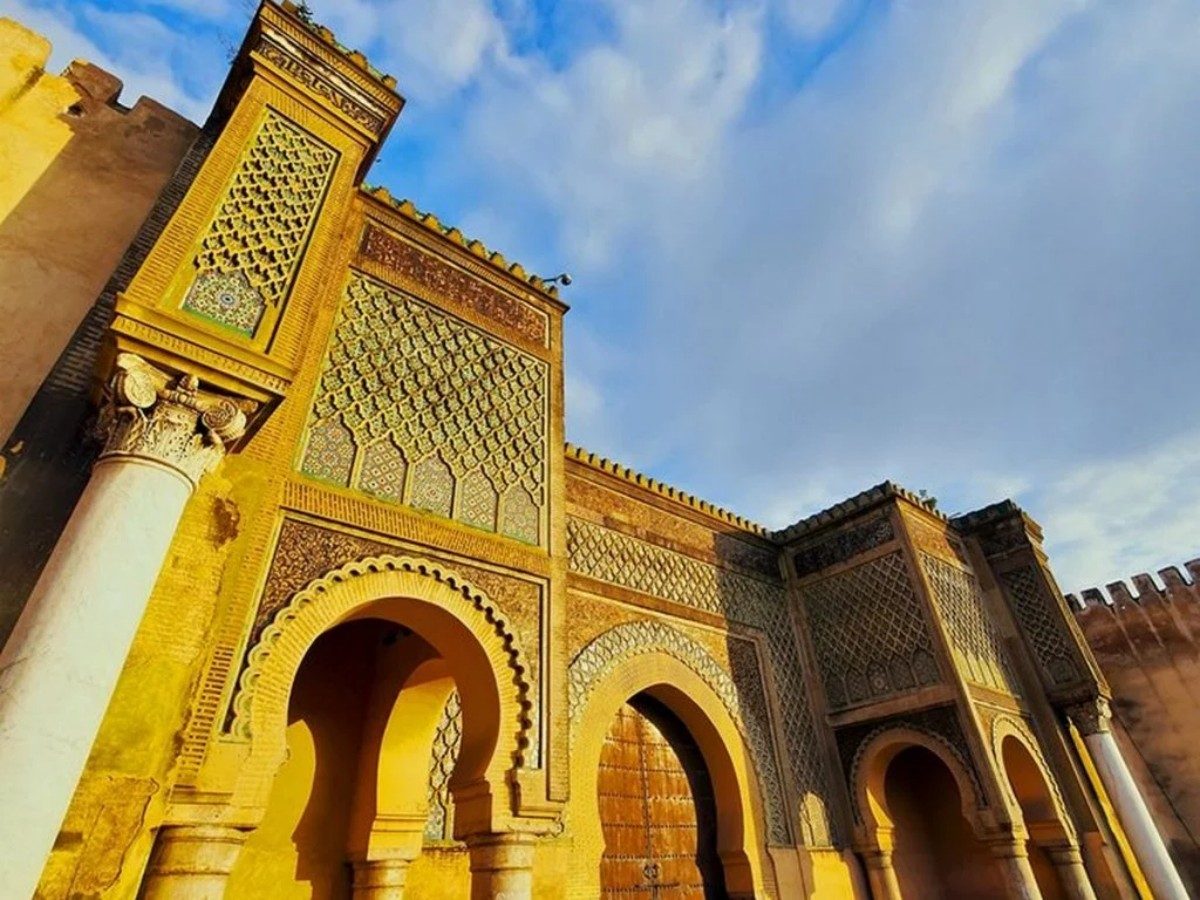
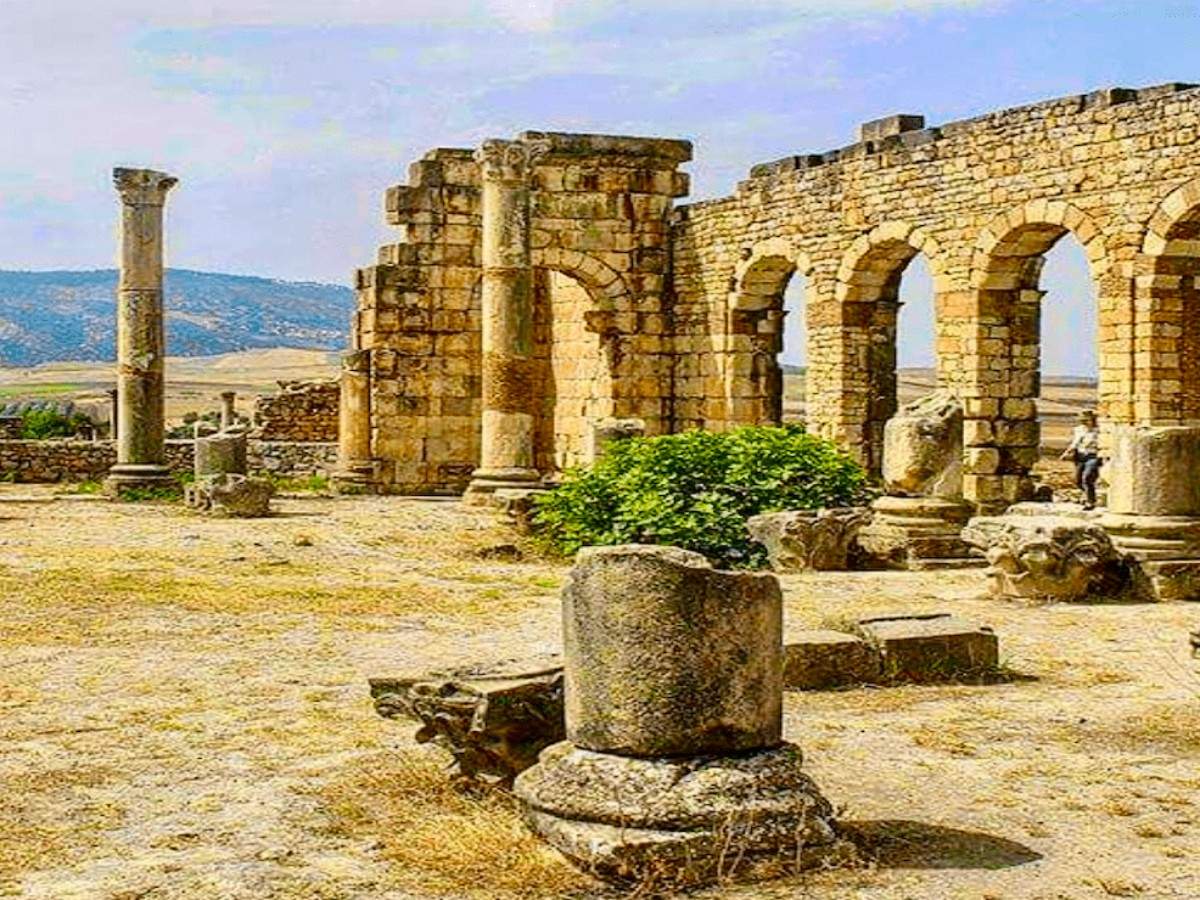
Approaching the Mansur Gate, you will be shocked by its details and the contradiction between the abruptness of the gap. The gate is 12 meters high and 6 meters wide. The mosaic patterns on the two sides of the fort are mainly blue, green and yellow, interweaving the octagonal stars and vines commonly seen in Islamic art, while the Arabic motto "Victory belongs to Allah" above the arch is suddenly interrupted in a certain line, revealing the uncarved limestone base. Even more eye-catching are the four Roman columns supporting the fort - they are not local stones, but transported from the ancient Roman ruins of Volubilis 30 kilometers away. The chisel marks left by ancient Roman craftsmen can still be seen on the columns. This design of "dialogue between ancient and modern times" is more meaningful against the backdrop of the gap.
Advertisement
Architects speculate that the gap may be due to the engineering adjustment after Ismail's death. In the original plan, the top of the city gate should be inlaid with gilded copper decorations or more complex geometric patterns, but the successor may choose to retain the original color of the stone for cost or aesthetic considerations, forming an "unfinished" visual impact. This treatment coincides with the concept of "humility to divine work" in Islamic architecture - just as the expansion of the Grand Mosque in Mecca was reduced in scale due to lack of funds, the gap in the Mansur Gate has also become a humble footnote to mankind's pursuit of perfection.
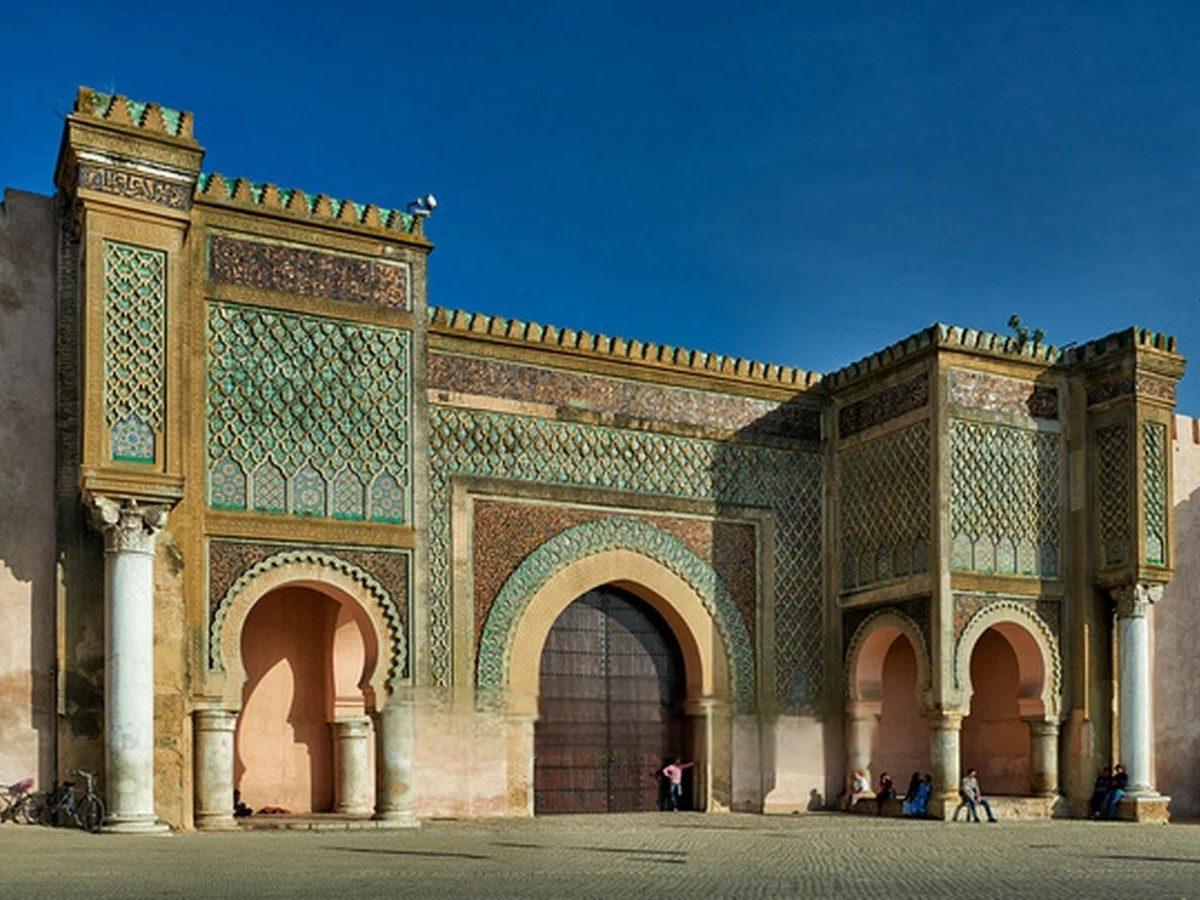
The fate of the Mansur Gate was not smooth sailing. The Lisbon earthquake in 1775 affected Meknes, and the royal palace complex was almost completely destroyed. Only the Mansur Gate and part of the city wall survived. This disaster accidentally sealed the "unfinished" state of the city gate - the broken scaffolding and the mosaic fragments that had not been installed were all frozen into slices of history in the ruins. During the French colonial period in the 19th century, the restoration project tried to fill the gap, but was resisted by local scholars for "violating authenticity", and finally retained the status quo with the principle of "minimum intervention".
At the end of the 20th century, Mansour Gate was listed as a World Cultural Heritage, and its "incompleteness" became a unique value. Today, the Cultural Center (Bab el-Mansour Cultural Center) inside the gate not only displays the cultural relics of the Ismail era, but also reproduces the construction process through multimedia installations: the virtual scaffolding and craftsmen working scenes projected on the city wall make visitors seem to travel back to the construction site three hundred years ago. And the gap, always facing the visitors with its original stone texture, silently tells the game of power, time and civilization.
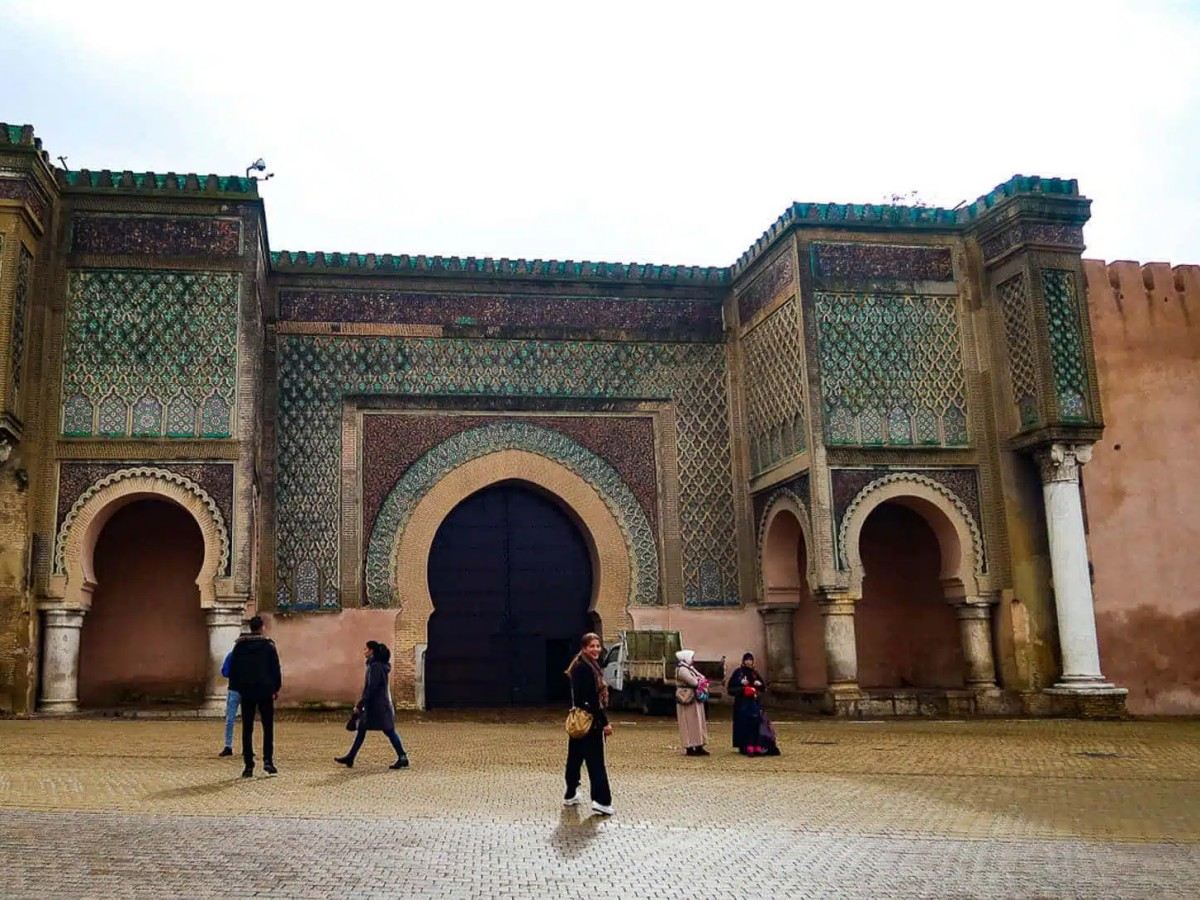
There are many versions of the cause of the gap. Some people say that Ismail deliberately stopped the work because he dreamed of "unfinished business" and waited for the guidance of the oracle; others say that the designer Mansour suddenly passed away before the completion, resulting in the loss of key craftsmanship. A more dramatic legend is that Ismail ordered the unfinished parts to be permanently preserved to punish the craftsmen who were slacking off, as a warning to future generations. Although these stories are not supported by historical materials, they add a mysterious color to the Mansur Gate, making it the Moroccan version of "Mona Lisa's Smile" - everyone can read different historical metaphors from it.
In the eyes of modern tourists, the gap has derived new interpretations. Photography enthusiasts have found that at a certain angle, the sun will pass through the gap and project geometric light spots on the ground, echoing the mosaic pattern; cultural scholars regard it as an "open text", believing that the unfinished state can better stimulate the viewer's imagination and sense of participation, just like the "wabi-sabi" concept in Japanese aesthetics, the incompleteness itself is a dynamic perfection.
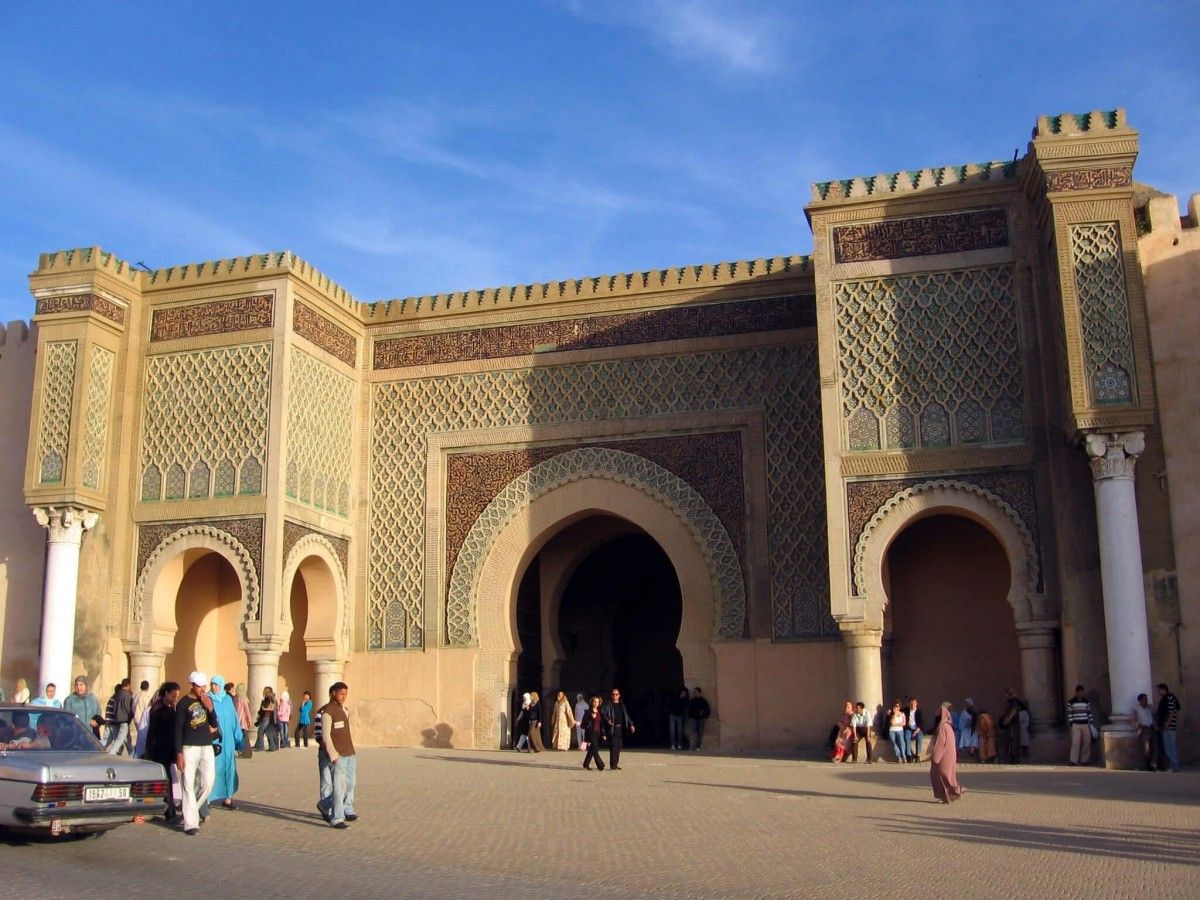
Best Viewing Angle: In the early morning or dusk, standing in the center of Hattin Square, the Mansur Gate under the oblique sunlight presents a warm golden tone, and the shadow contrast at the gap is particularly strong. It is recommended to bring a telephoto lens to capture the details of the mosaic pattern and Roman columns.
Cultural Center Experience: The wooden handicraft shop inside the city gate is worth a visit. You can buy mosaic coasters or copper bookmarks inspired by the Mansur Gate. The interactive device in the museum allows you to "stitch" virtual mosaics with your own hands and experience the skills of ancient craftsmen.
In-depth route: Plan your itinerary in combination with the world heritage sites in Meknes. After visiting the Mansur Gate, walk 10 minutes to the Royal Stables and Granaries (Hri Souani). This giant building that can accommodate 12,000 horses was also ordered to be built by Ismail. Its rammed earth walls and ventilation design show the wisdom of North African craftsmen; drive 30 kilometers to Volubilis and see the ancient Roman ruins that provided building materials for the Mansur Gate.
Hidden Easter Egg: In the alley on the right side of the city gate, there is a courtyard cafe called "Dar Jamai". When sitting on the terrace and sipping mint tea, you can just observe the gap of the Mansur Gate from the side and feel the wonderful fusion of history and reality.
Standing in front of Mansur Gate, three hundred years of wind and sand seem to whisper between the bricks and stones. Is this gap a regret, or an artistic statement that transcends the times? Perhaps the answer is just like the metaphor often used in Islamic architecture - earthly buildings can never reach the perfection of heaven, and the "unfinished" Mansur Gate is an eternal memorial to this humility.